Luxor
Luxor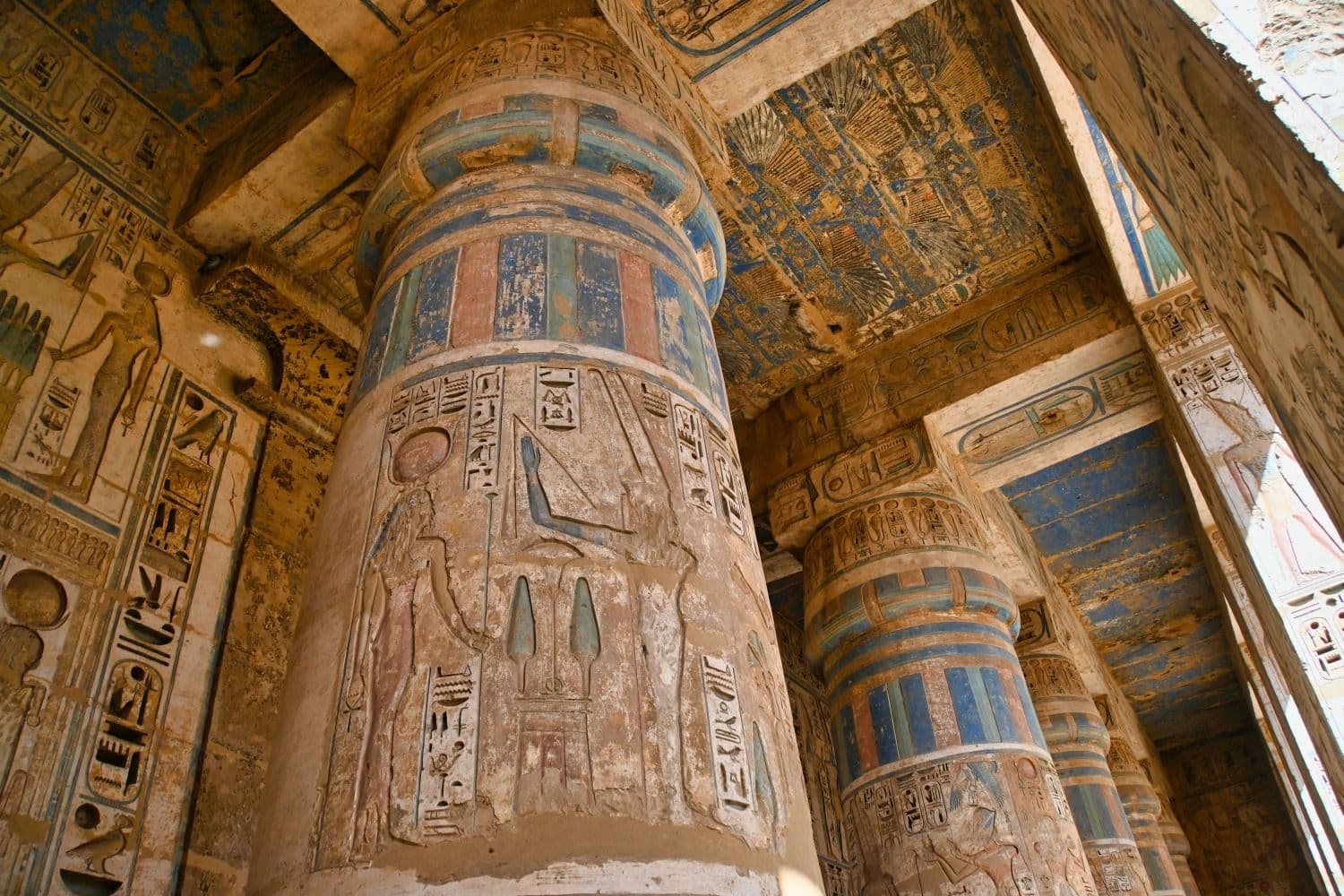
The temple everyone walks past — and shouldn't.
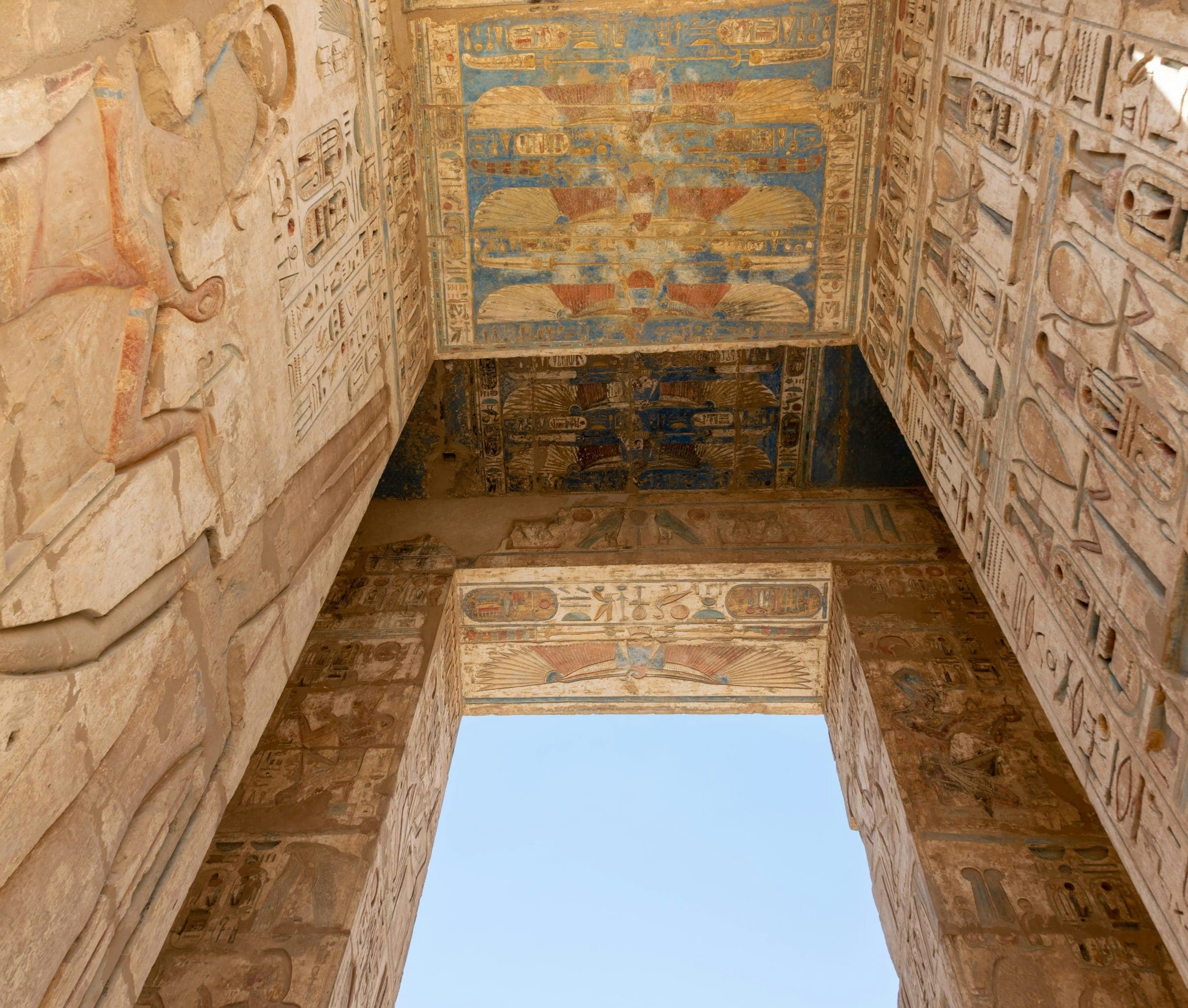
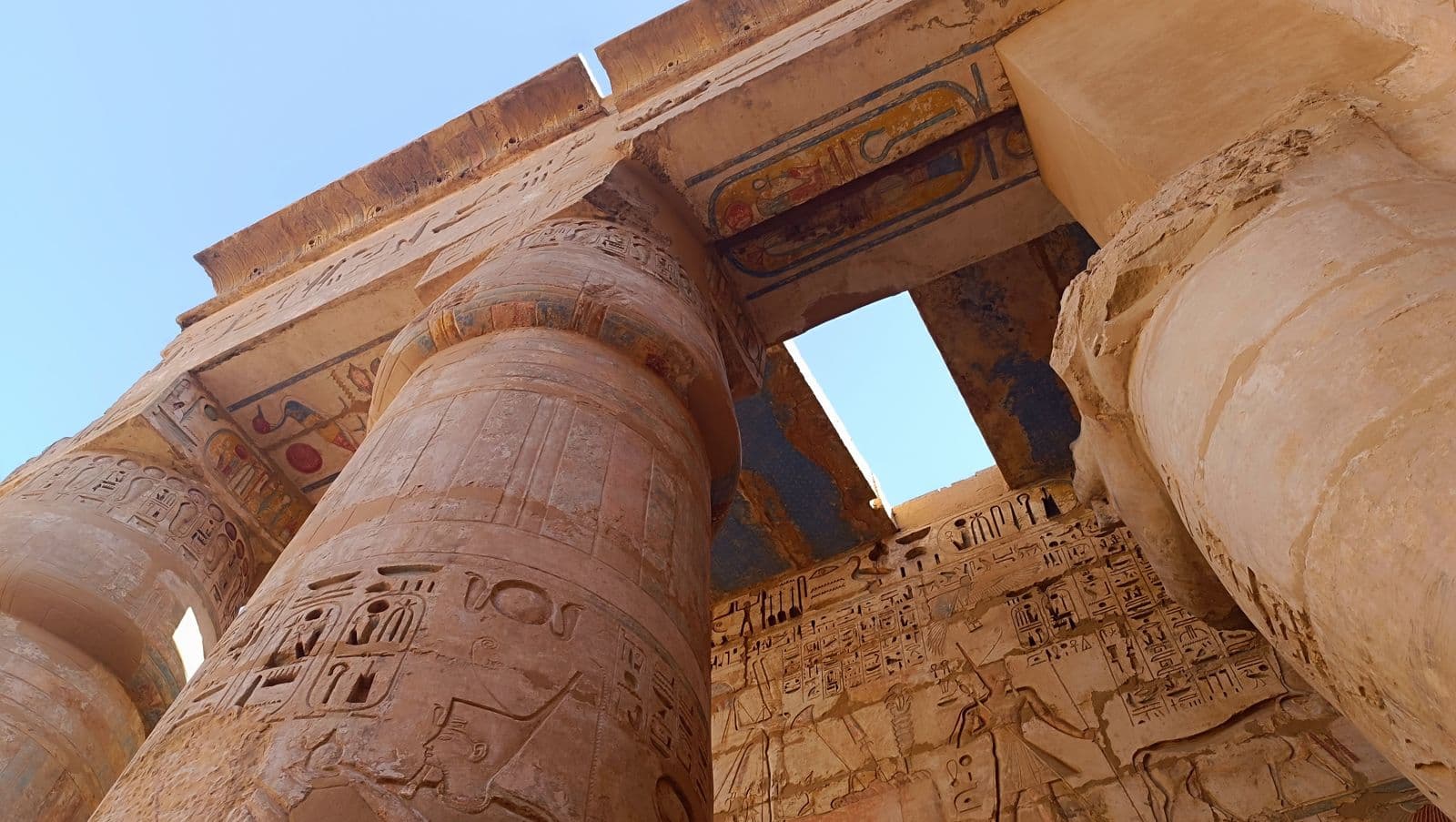
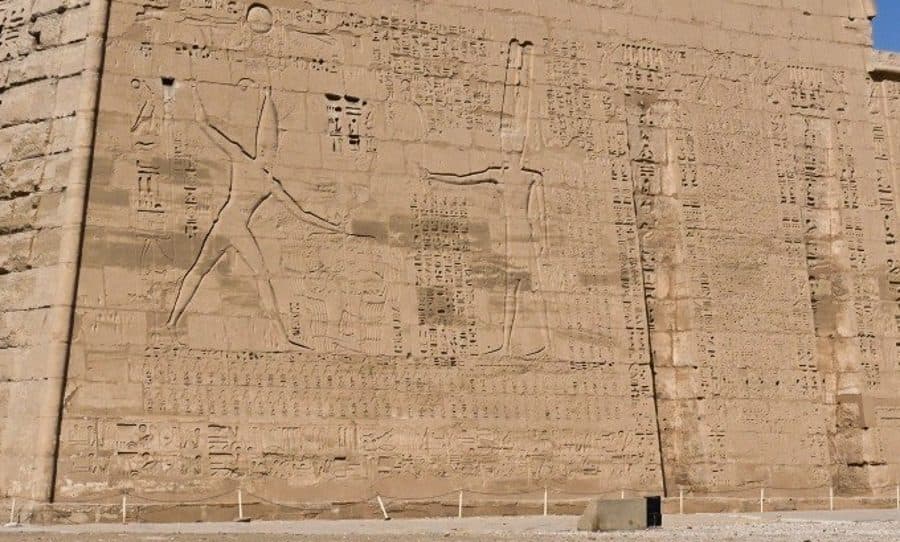
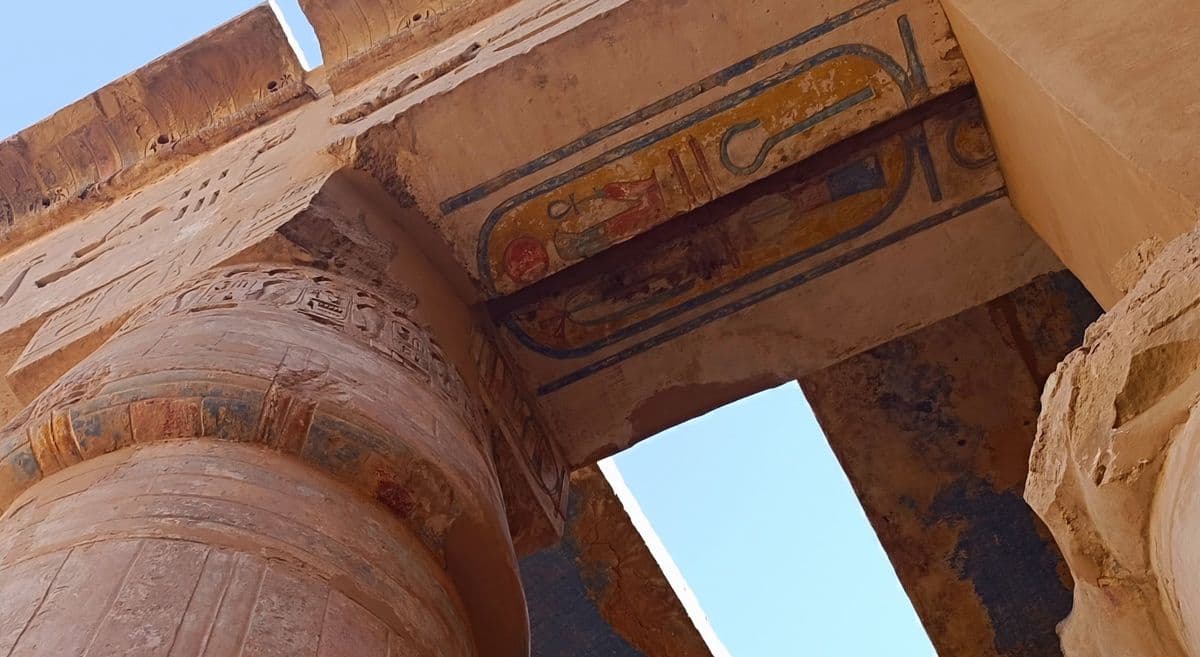
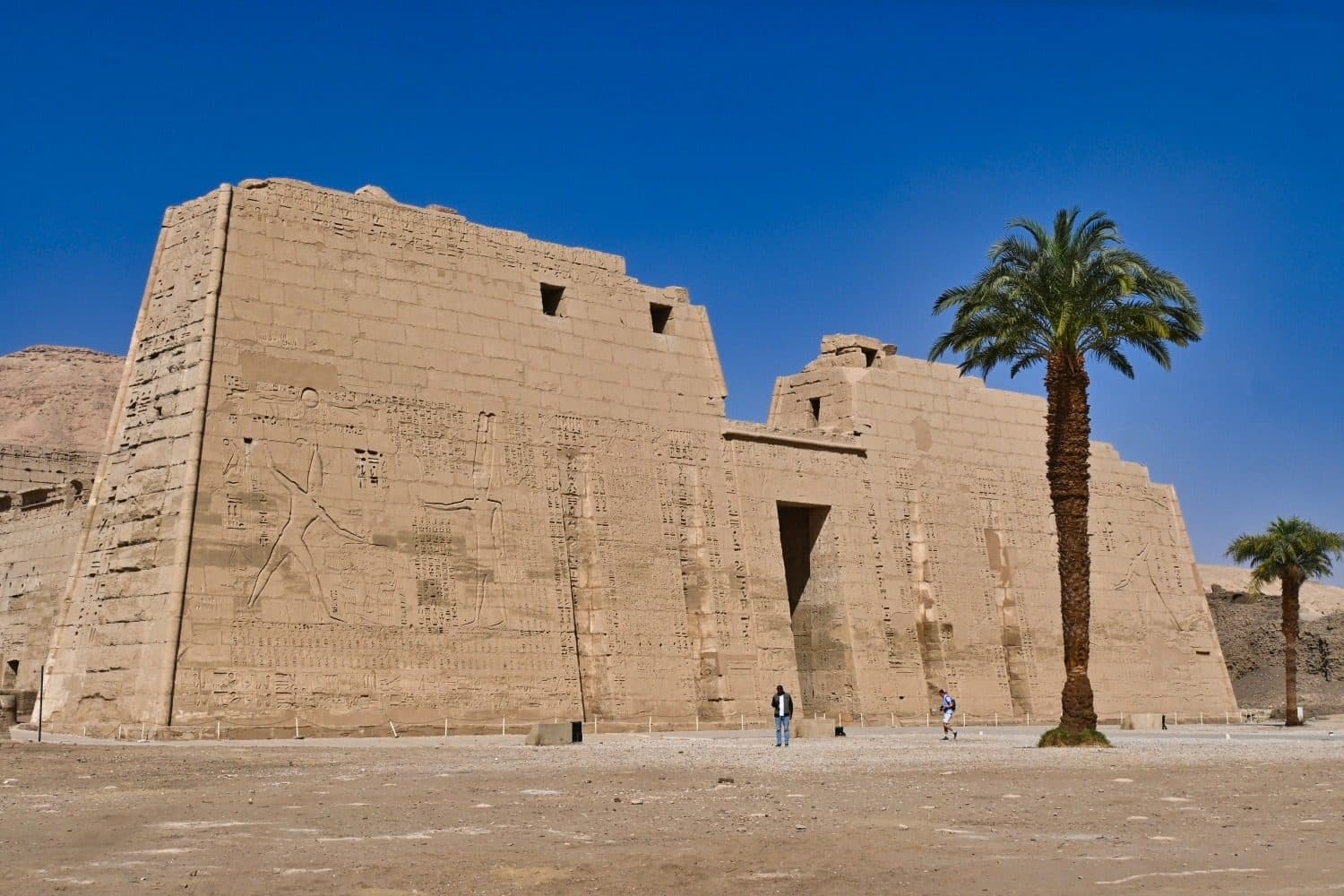
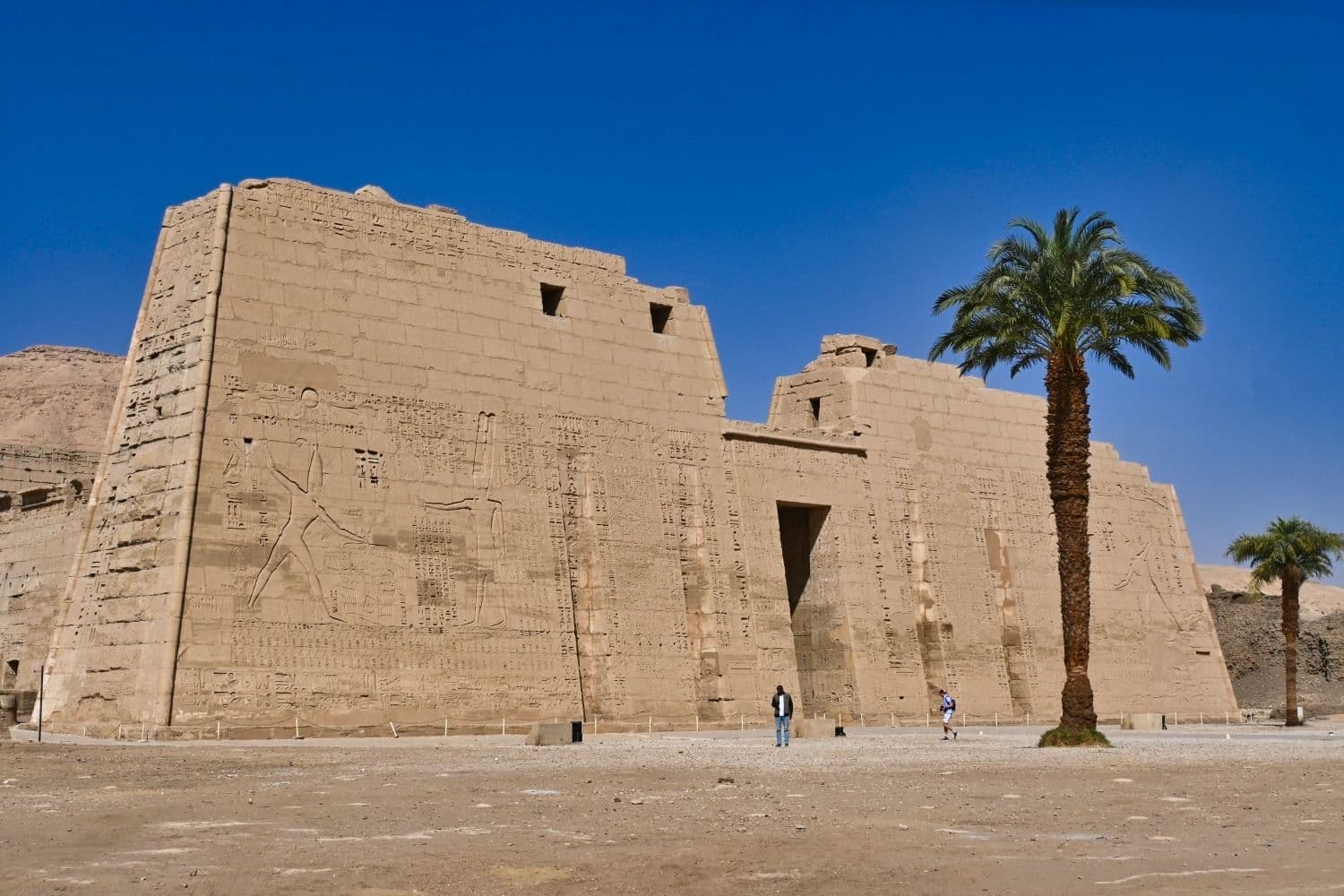
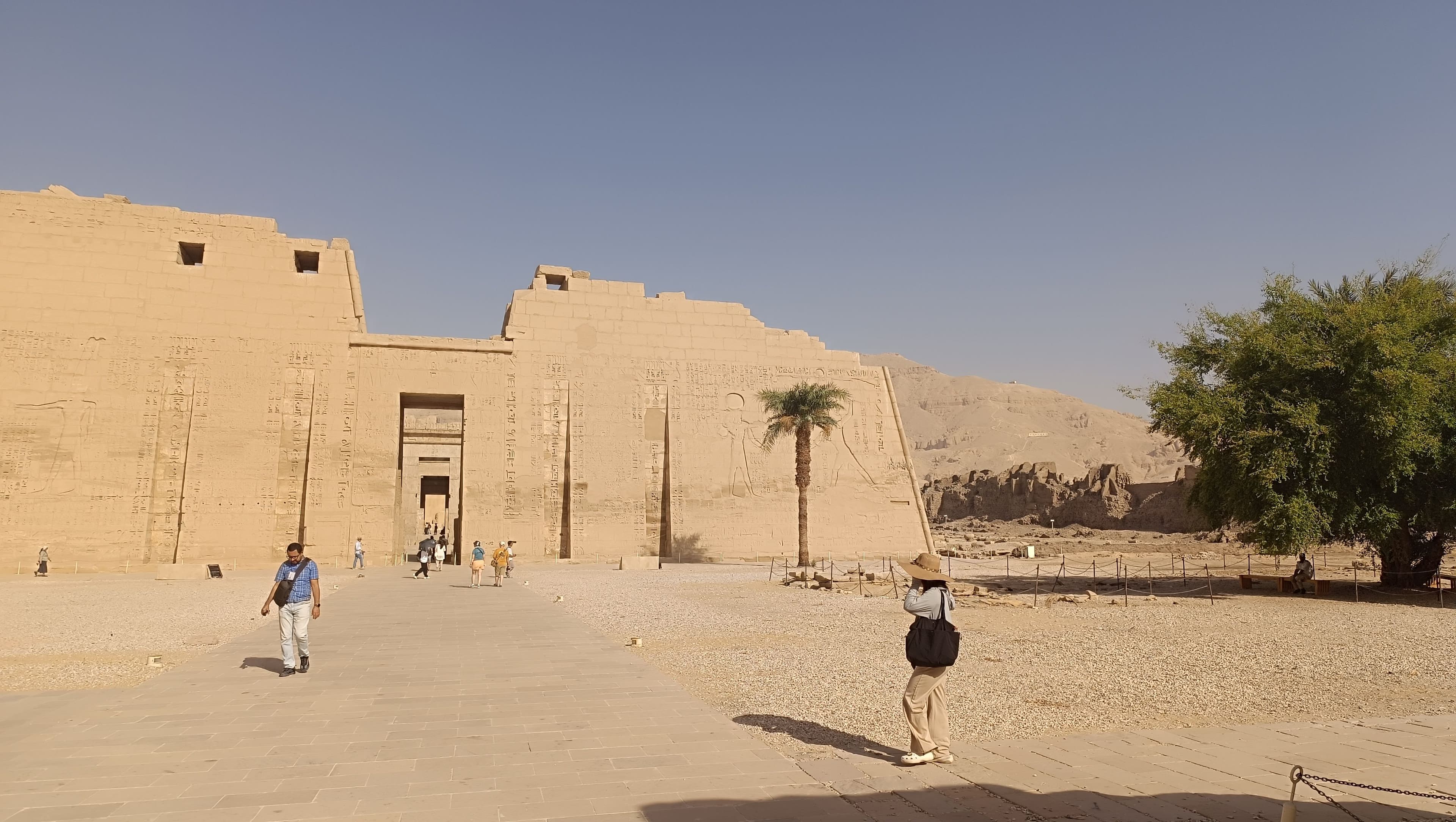
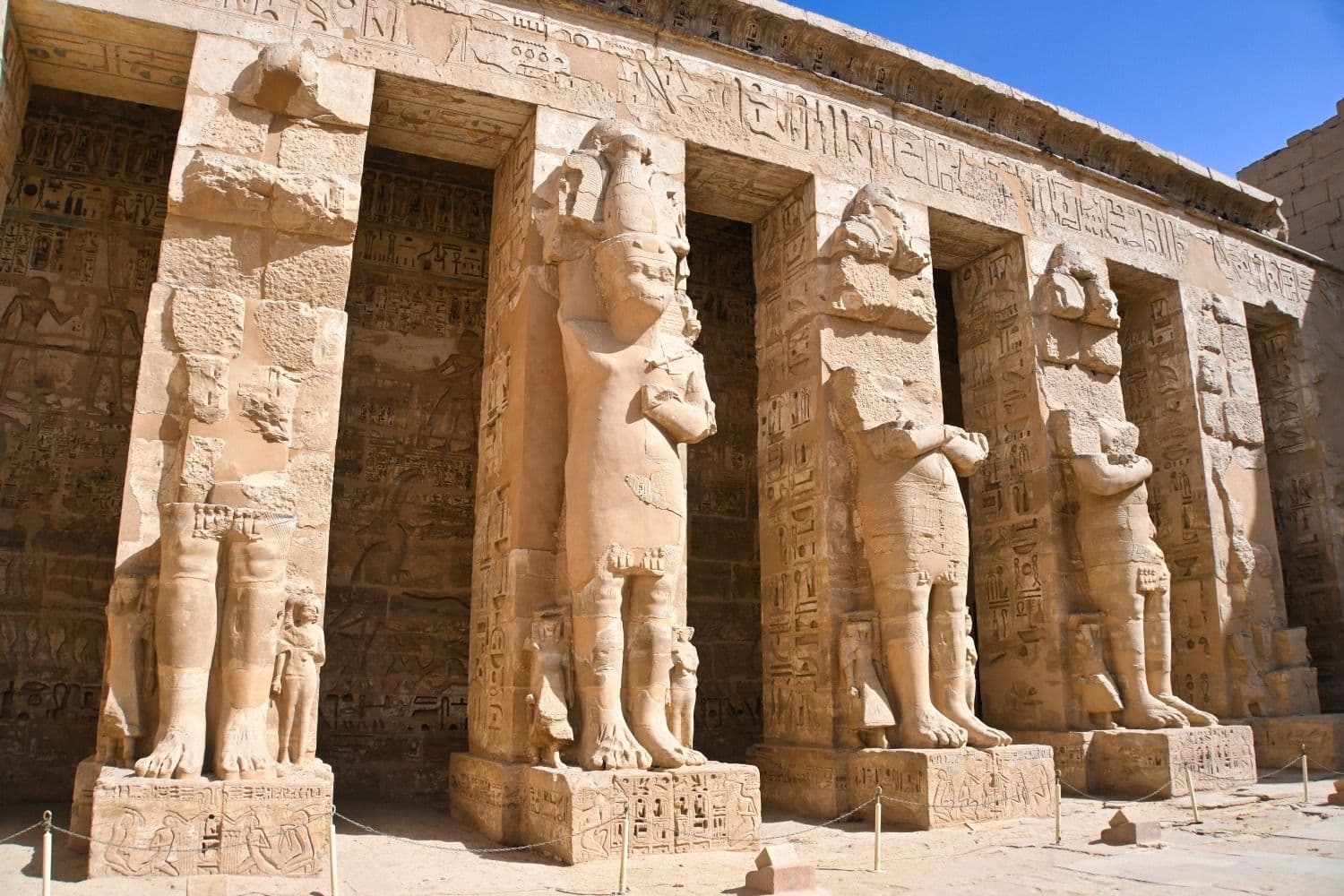
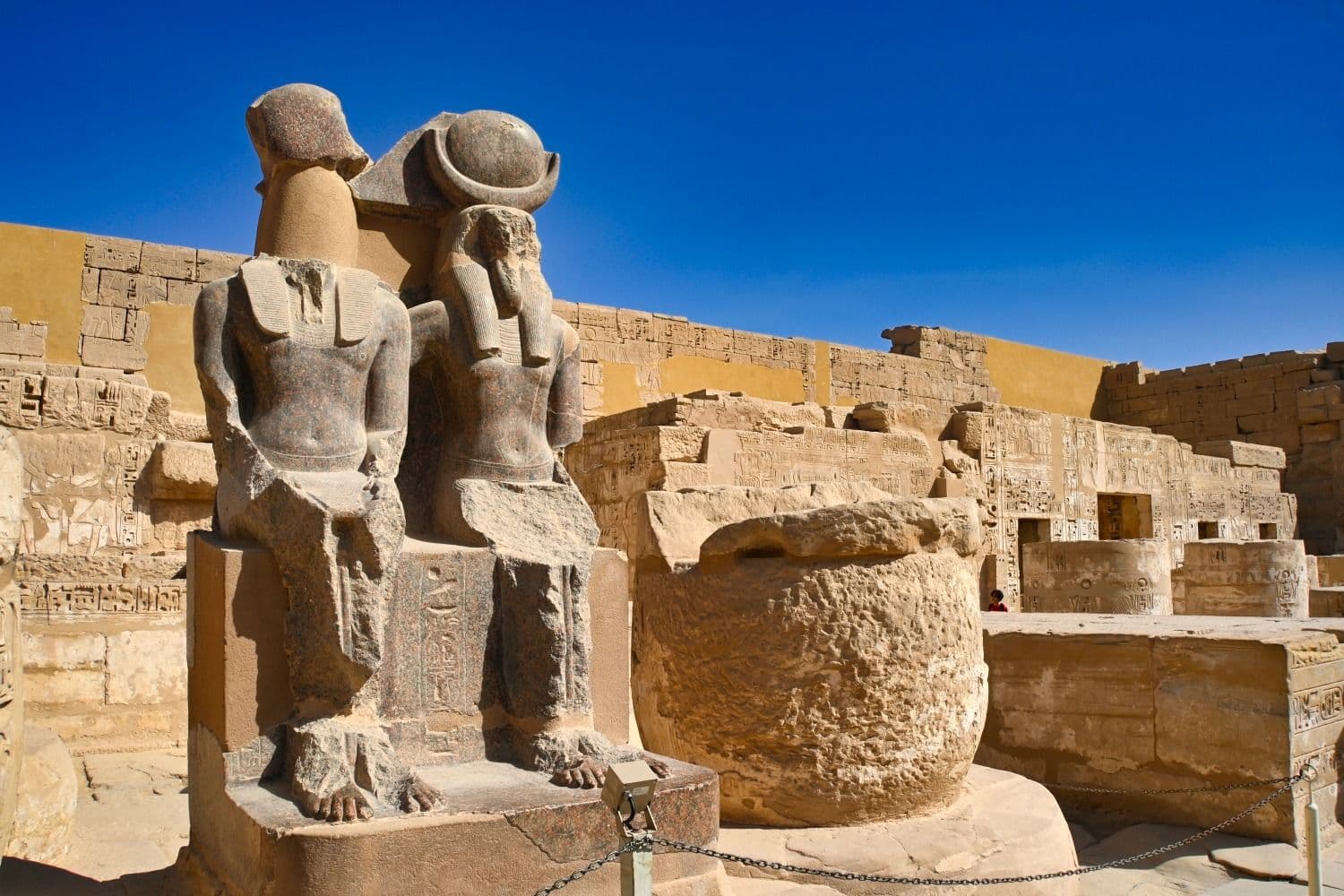
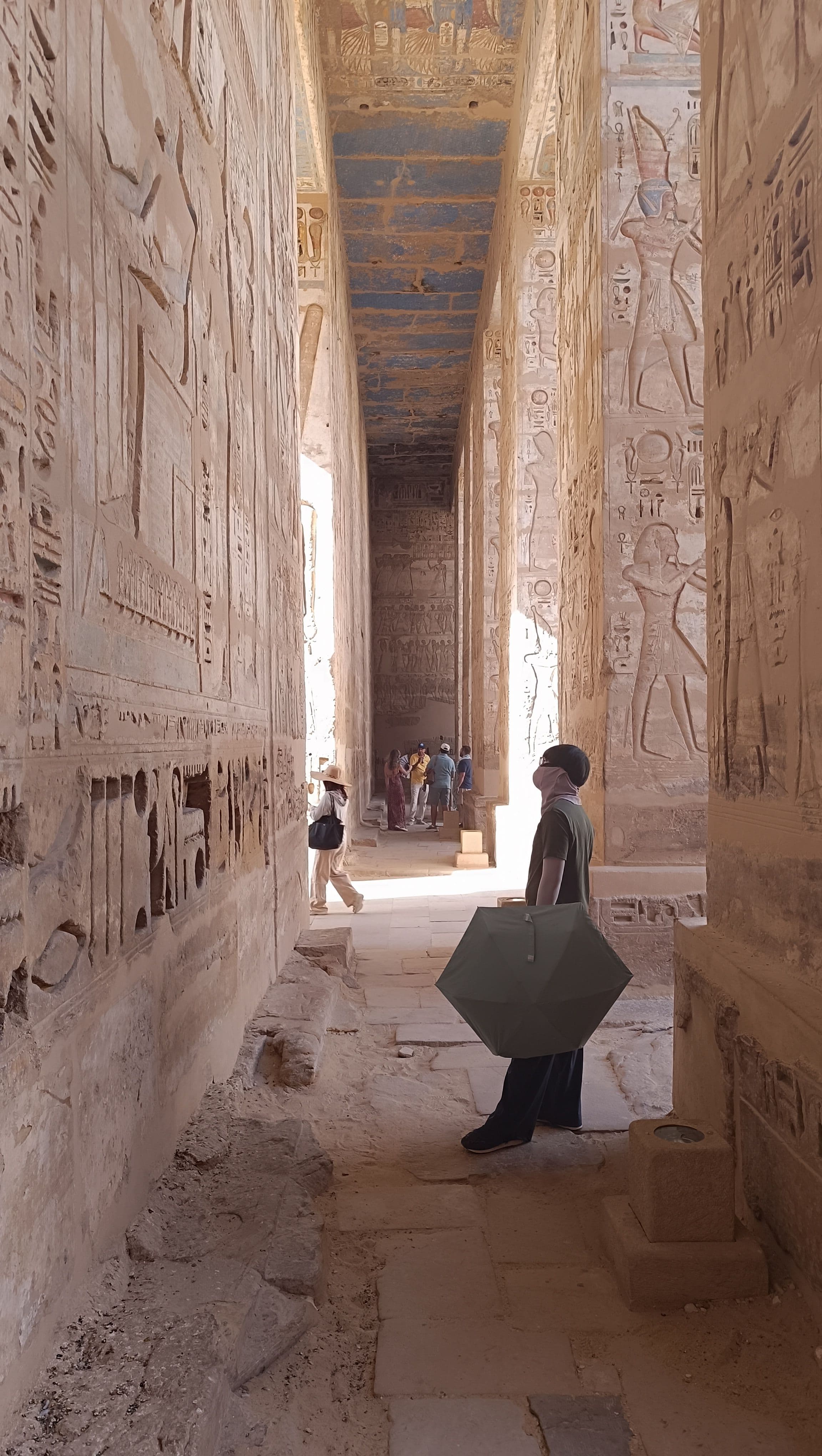
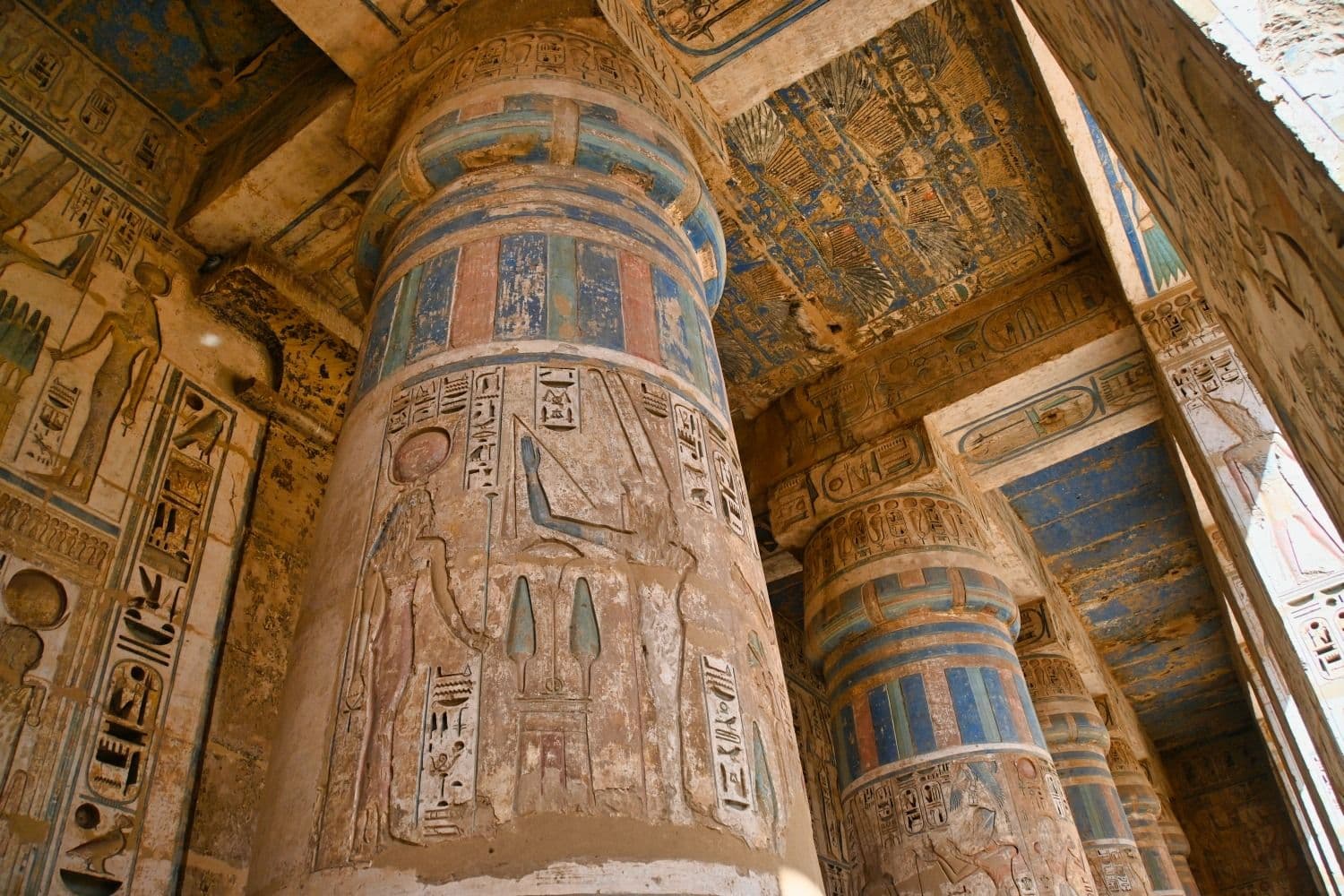
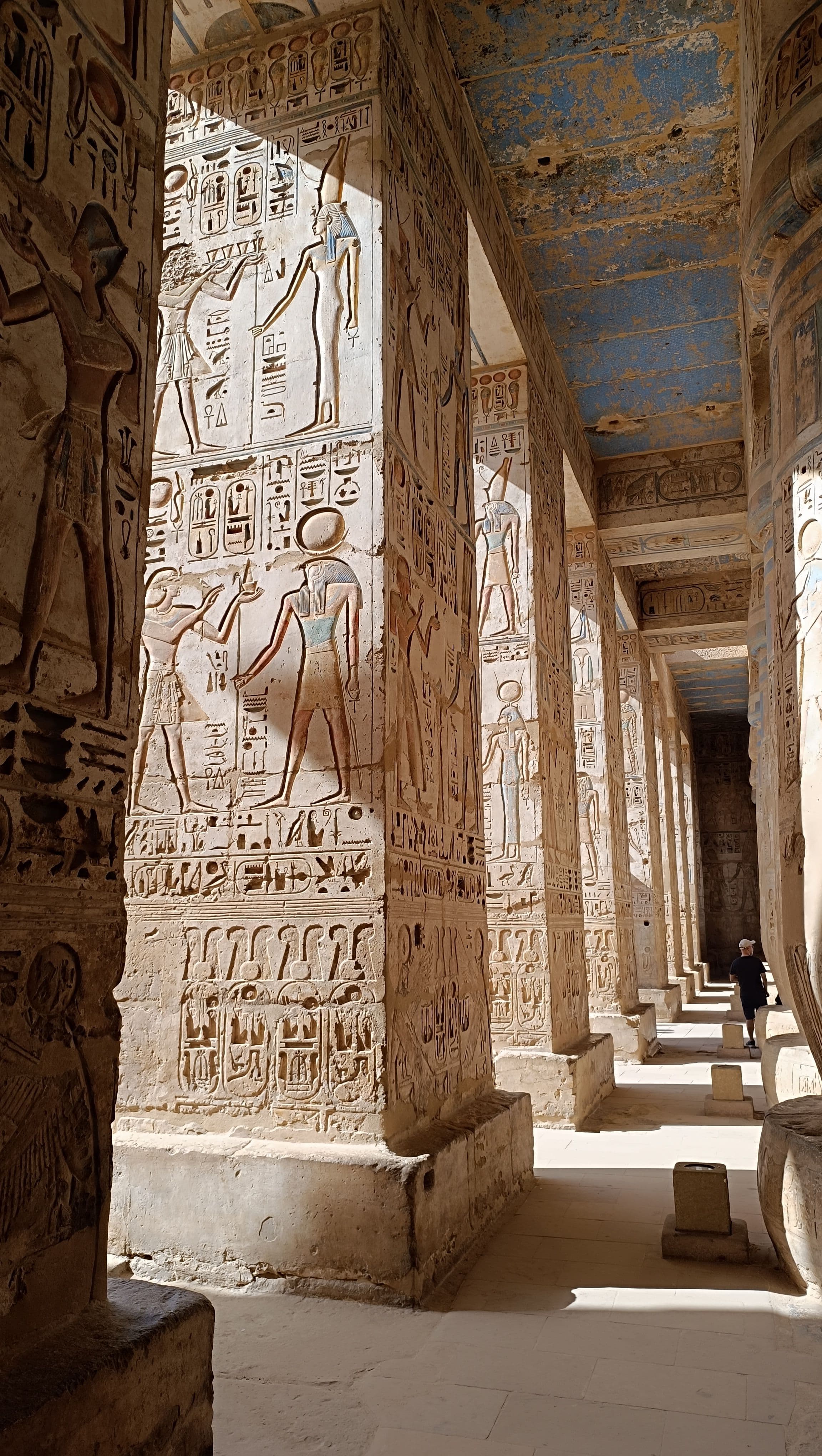
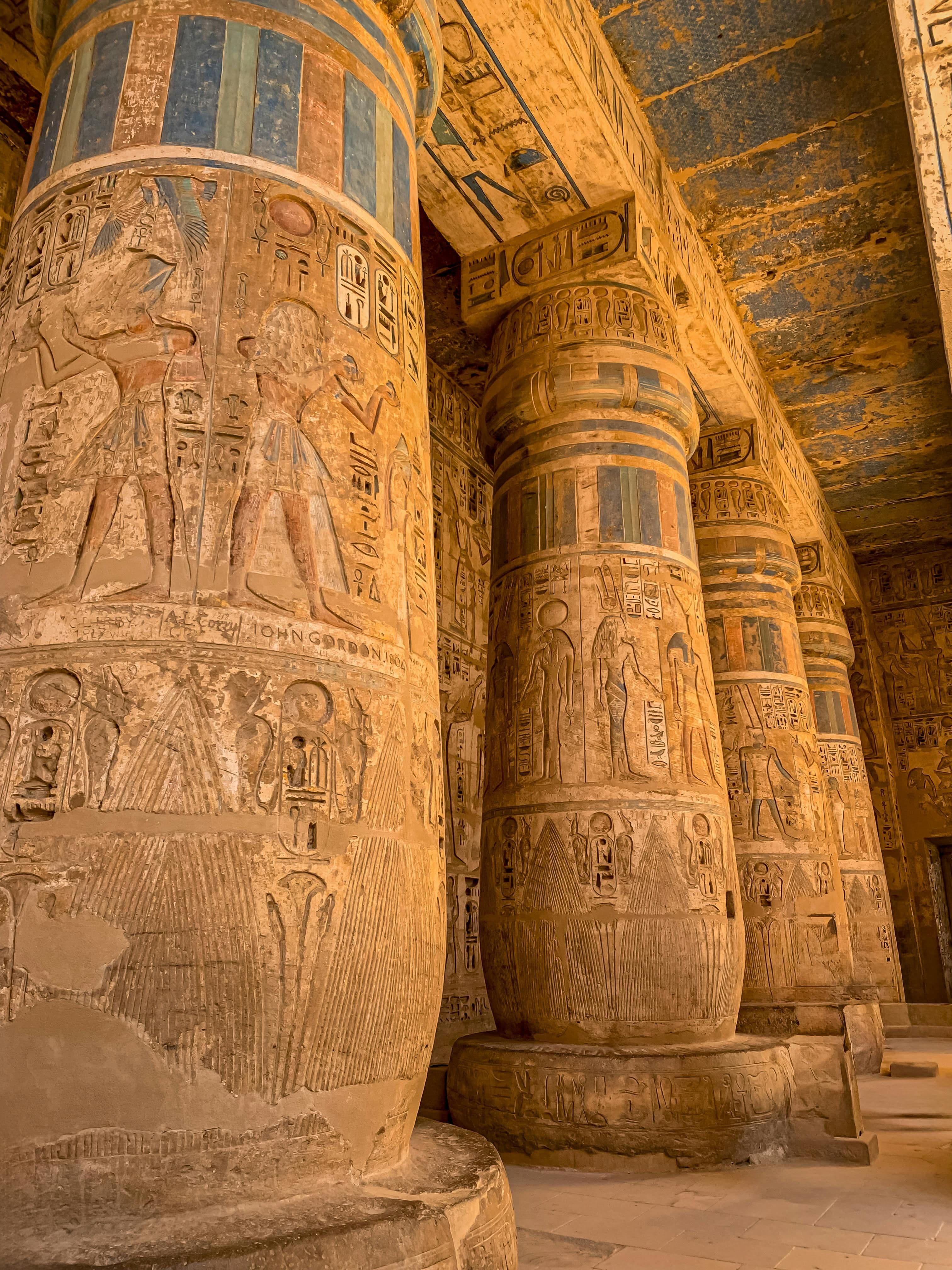
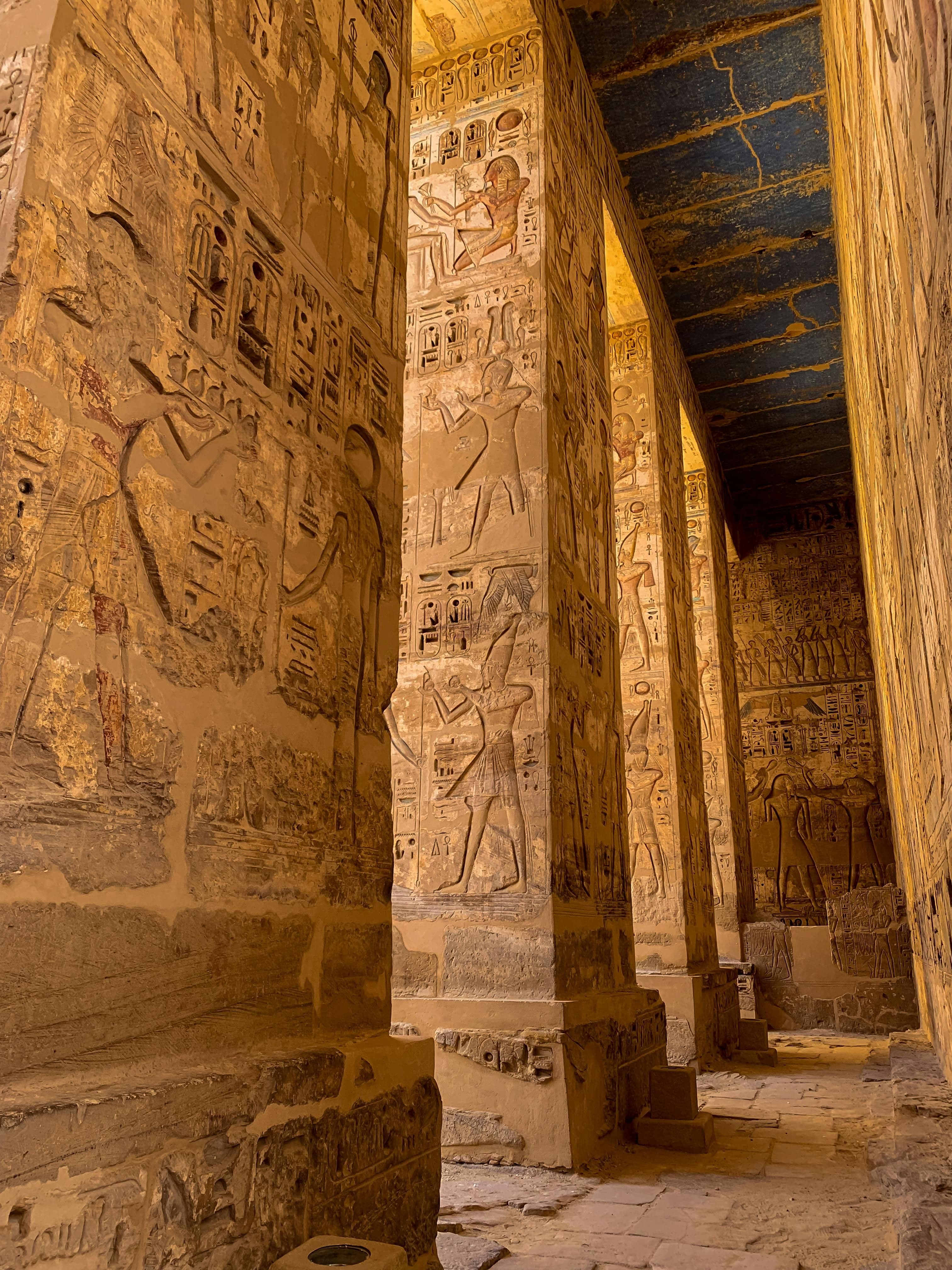
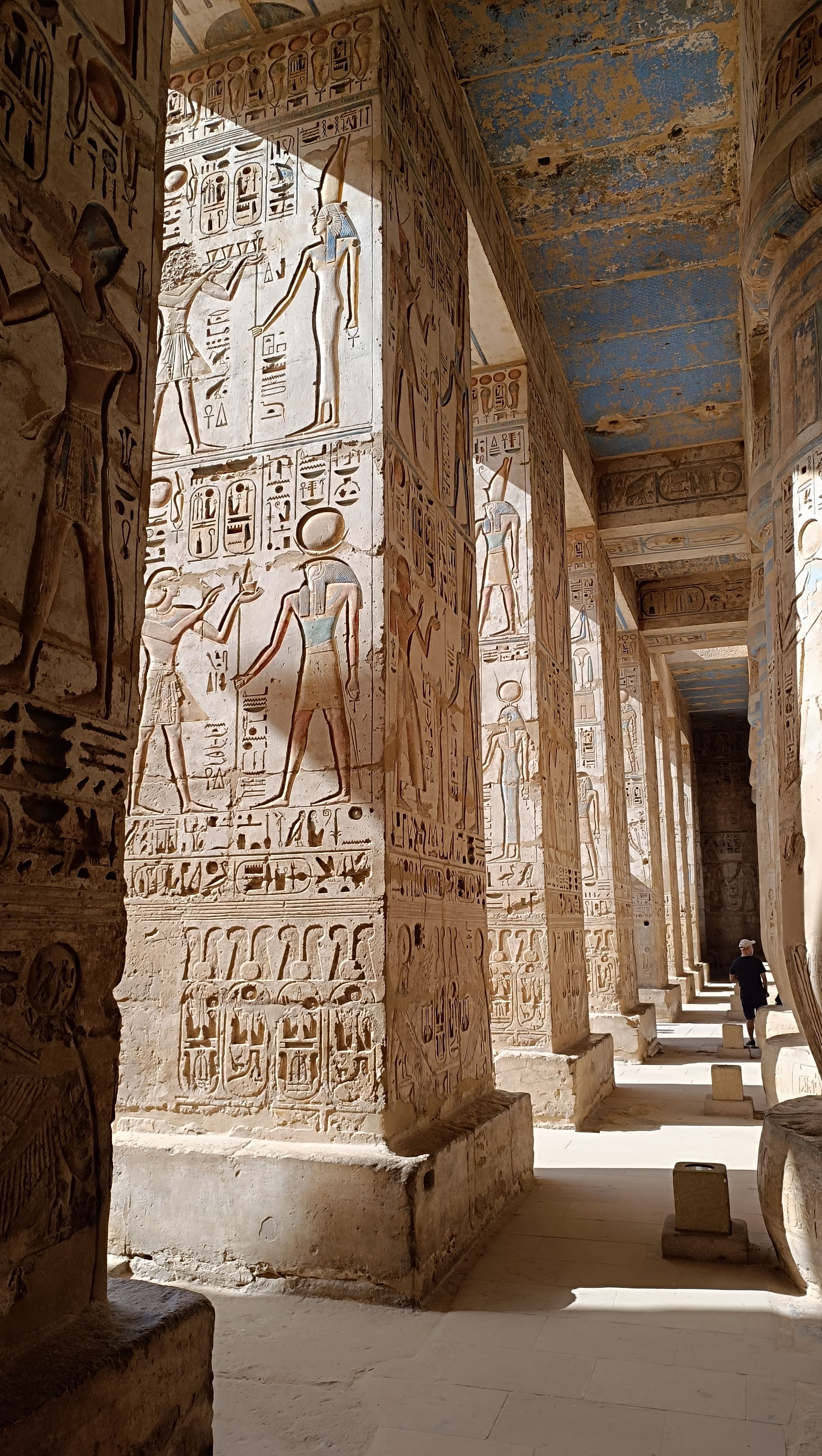
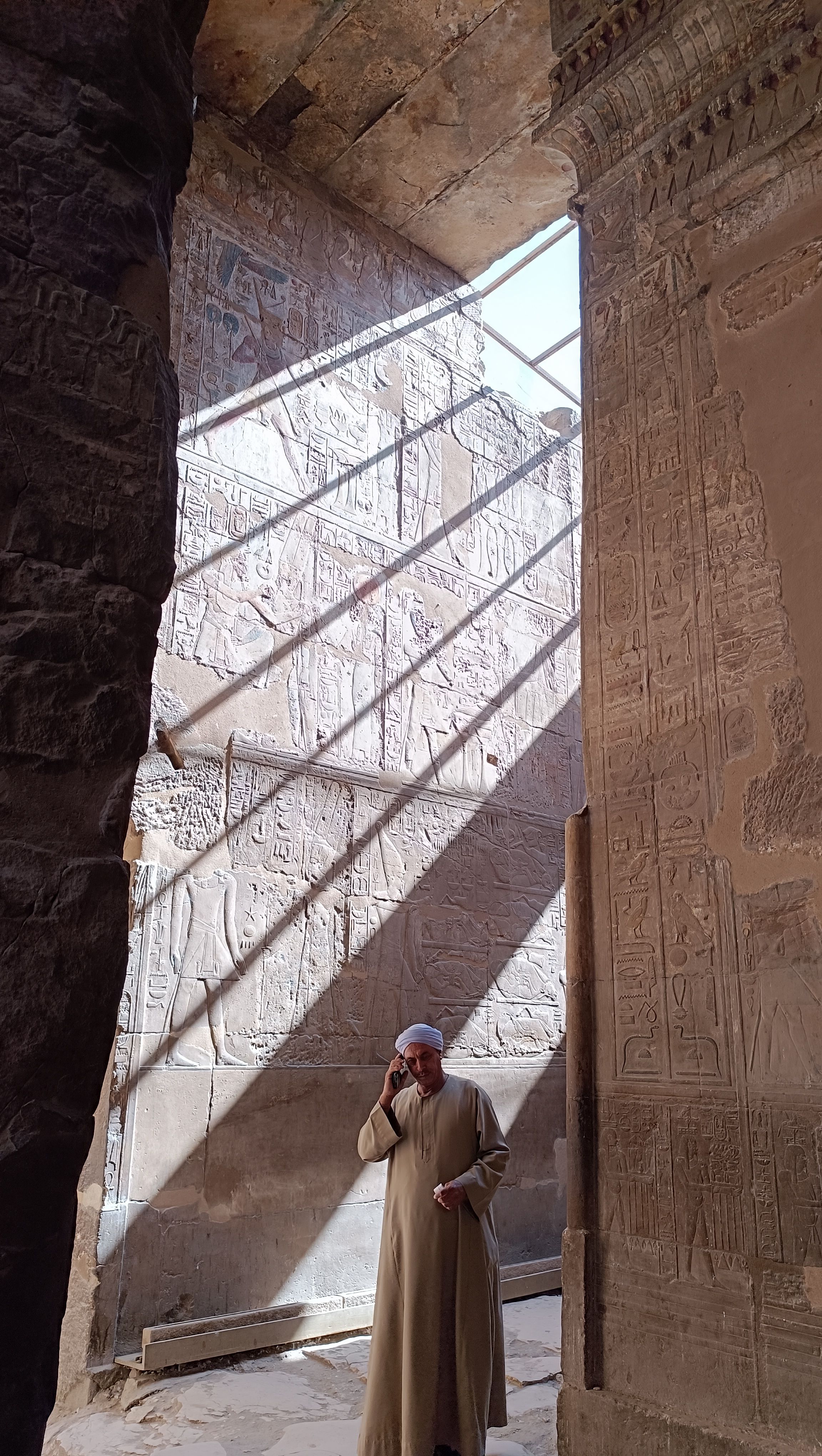
While the buses queue at Karnak, Medinet Habu stands almost empty — yet it is arguably the most complete temple in Thebes. Colour still clings to its walls, even across the ceilings. The great pylon carries the only eyewitness record of the Sea Peoples. And a two-storey Syrian gate guards a royal palace most visitors never realise is there.
You'll have room to breathe — and a certified Egyptologist to read three thousand years for you, privately.
A place built on one living idea: that life renews itself.
Strip away the names, and Medinet Habu was raised to hold a single principle — one many cultures have arrived at on their own. The Egyptians said the first land rose here out of chaos; that from formlessness, order and life appeared, and kept appearing. They gave the force a name, and imagined elder powers asleep beneath the mound. But the idea beneath the story is older than any god's name: creation is not one event, safely in the past — it is a movement that repeats. What is tired can be renewed. What has ended can begin again.
So for a thousand years, every tenth day, this temple performed a return — the source revisited, the cycle wound forward, life quietly made new. Every tradition keeps some form of this rhythm: the fast and the feast, the retreat and the return, the old year and the new. To stand here is to step inside that pattern made of stone — a reminder that renewal was something they built into the calendar, on purpose, every ten days for a thousand years.
The same dream, written large
Even a pharaoh sought it. Ramesses III raised his memorial temple on this exact ground for a reason anyone can feel — he wanted to endure: his name spoken, his spirit tended, his life renewed beyond its own ending. Priests kept that renewal alive with daily care, festivals filled its courts, and the living king showed himself to his people from the palace wall. His dream was simply the human one, made monumental — to begin, to last, to be made new — and he placed it where beginning itself was said to have begun.
To know yourself is to know you still carry a beginning — and this is a place built to remind you of it.
A beginning you can stand inside.
Most of us never get to mark a fresh start with a place. Here, you can.
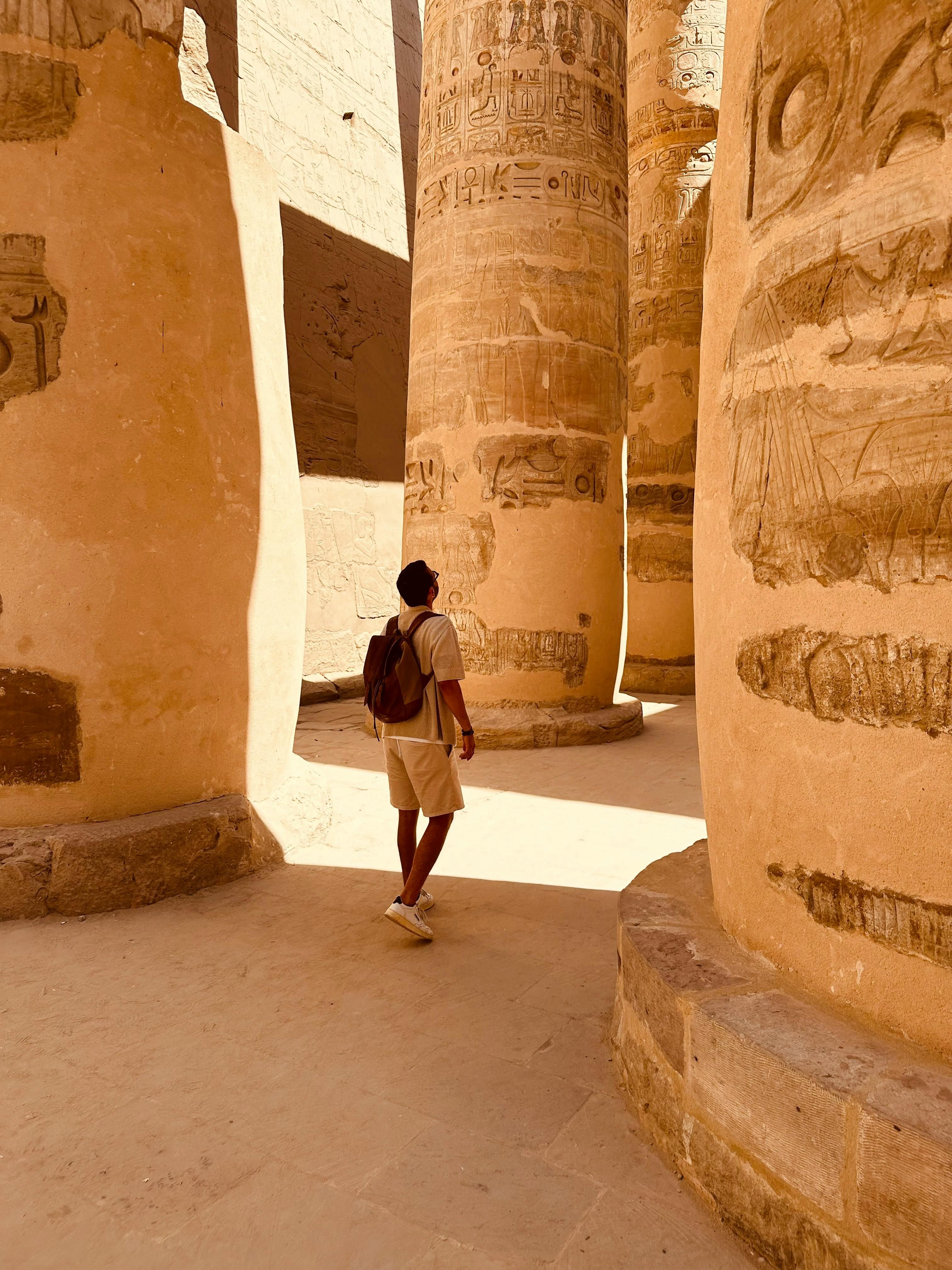
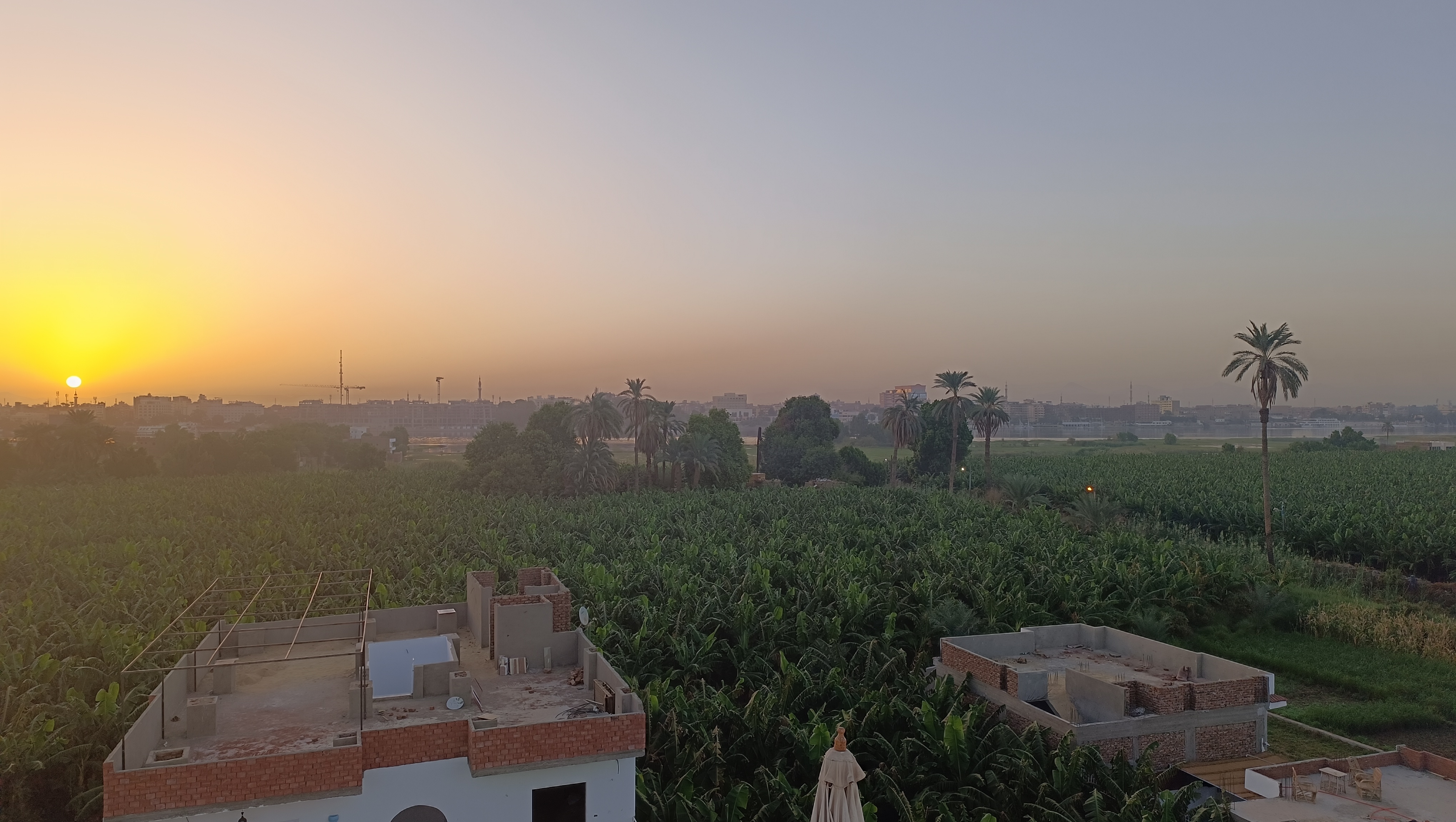
To stand at first light on the mound where Egyptians believed the world itself began — where even their gods came to be renewed — is to borrow that idea for yourself: a pause at the source. An early hour, no schedule, and nobody asking anything of you. Most people come to Luxor for monuments. The ones who come here — early, unhurried, with someone to tell them what they're seeing — tend to leave with something harder to photograph: a sense of scale, and of stillness.
Bring a new chapter to it — a milestone, an anniversary, a decision, or simply the wish to feel small in the best possible way. It's the one stop in Luxor most guests say they never forget.