Luxor
Luxor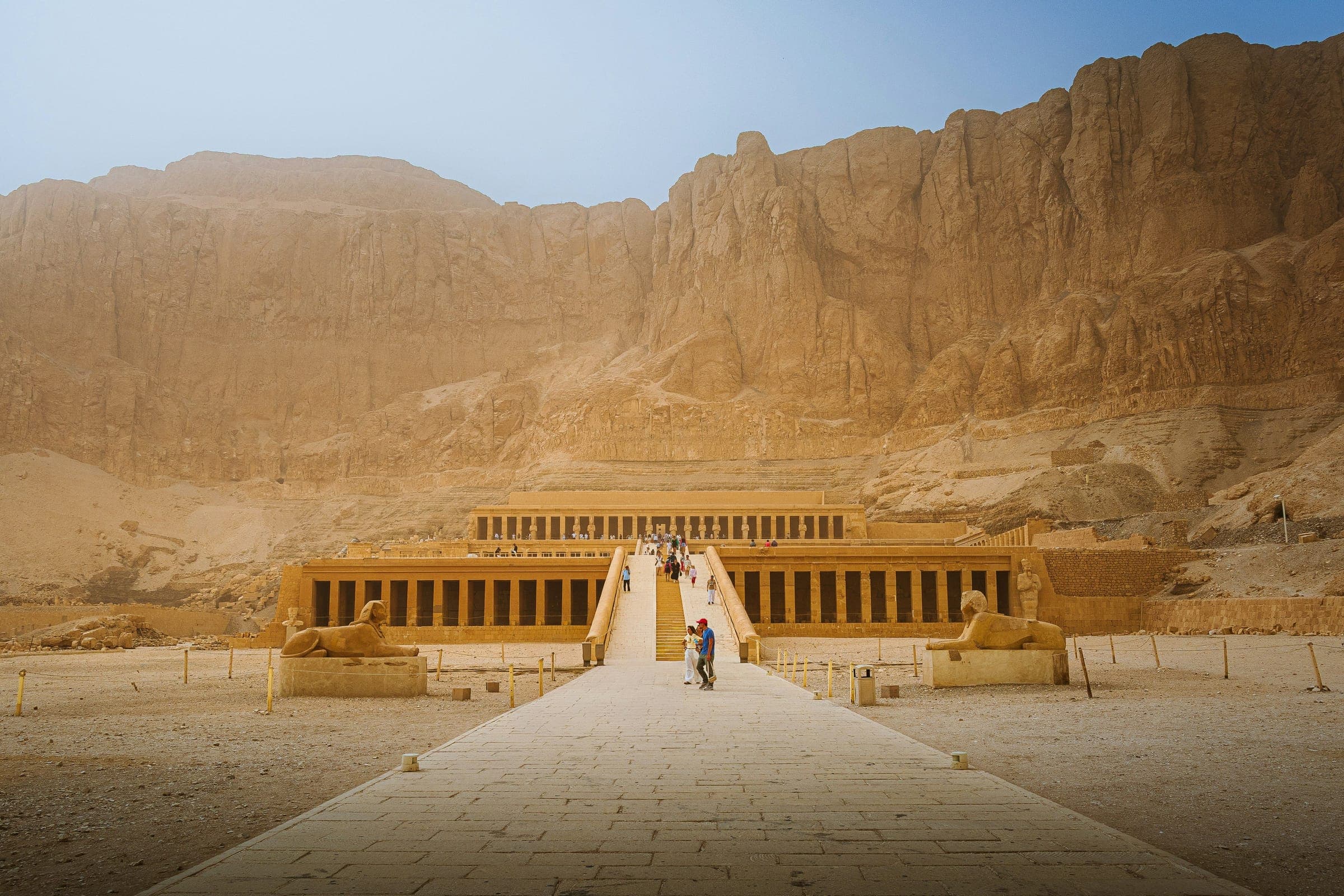
The building that looks three thousand years too modern.
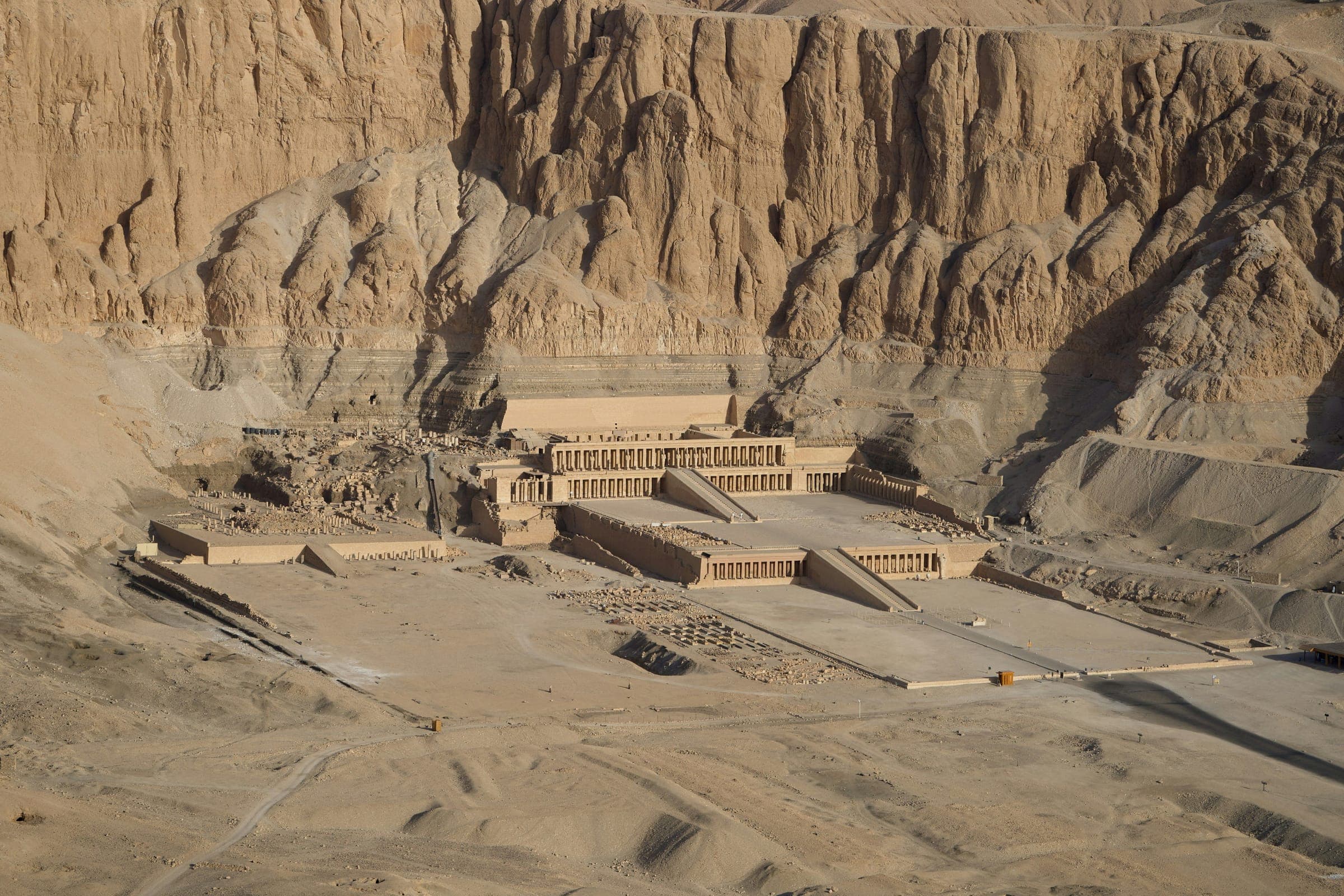
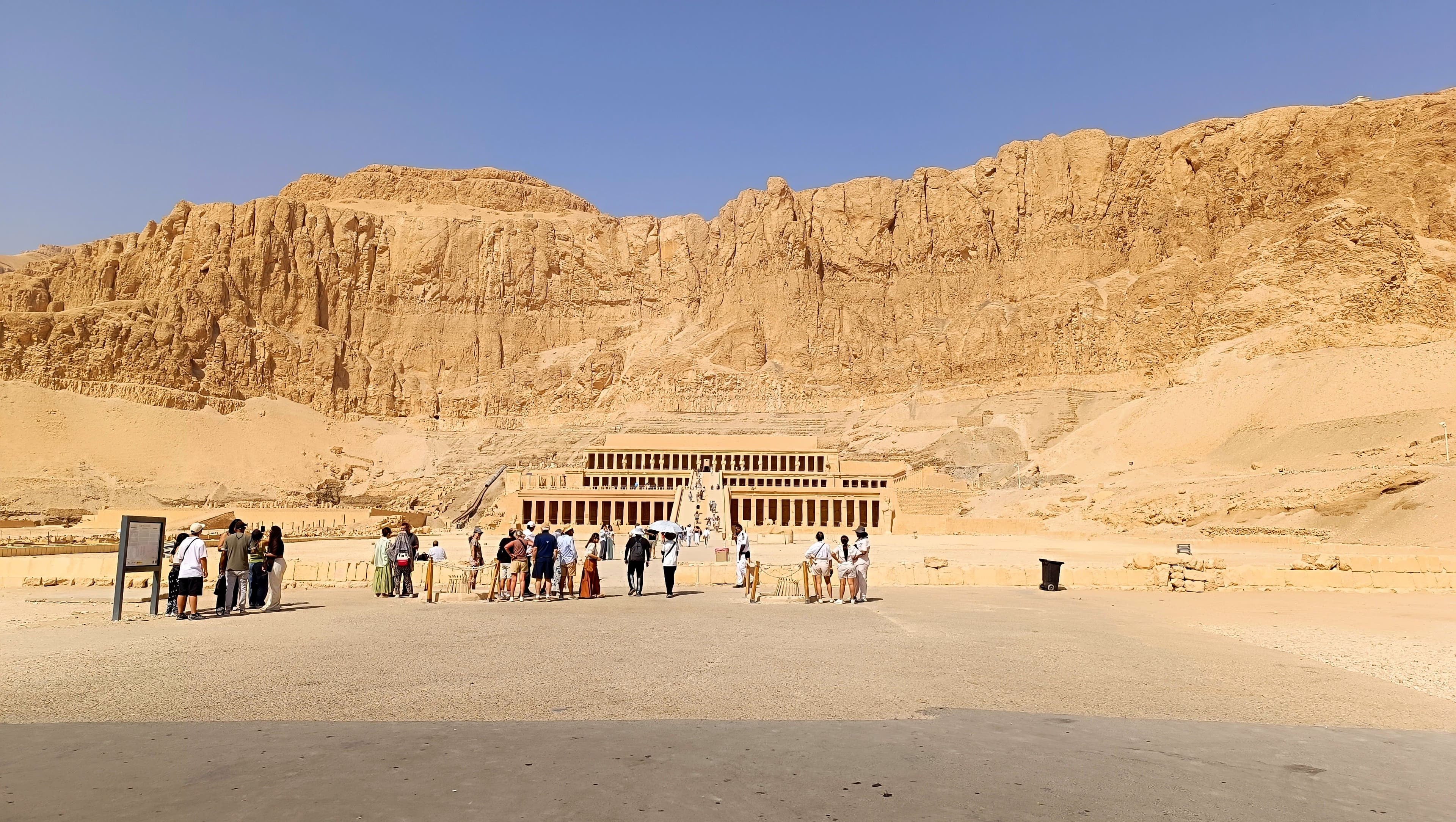
Come around the last bend of the West Bank road and it stops you: three long, clean terraces of pale stone, rising in straight lines out of the desert floor against a wall of sheer golden cliffs. It looks nothing like the heavy, dark temples across the river. It looks, honestly, like something built last century. It was built thirty-five hundred years ago, by a woman, and it is one of the most confident pieces of architecture the ancient world ever produced.
Most visitors photograph it and move on. They miss the story — and the story is the reason to come.
The woman who would be king
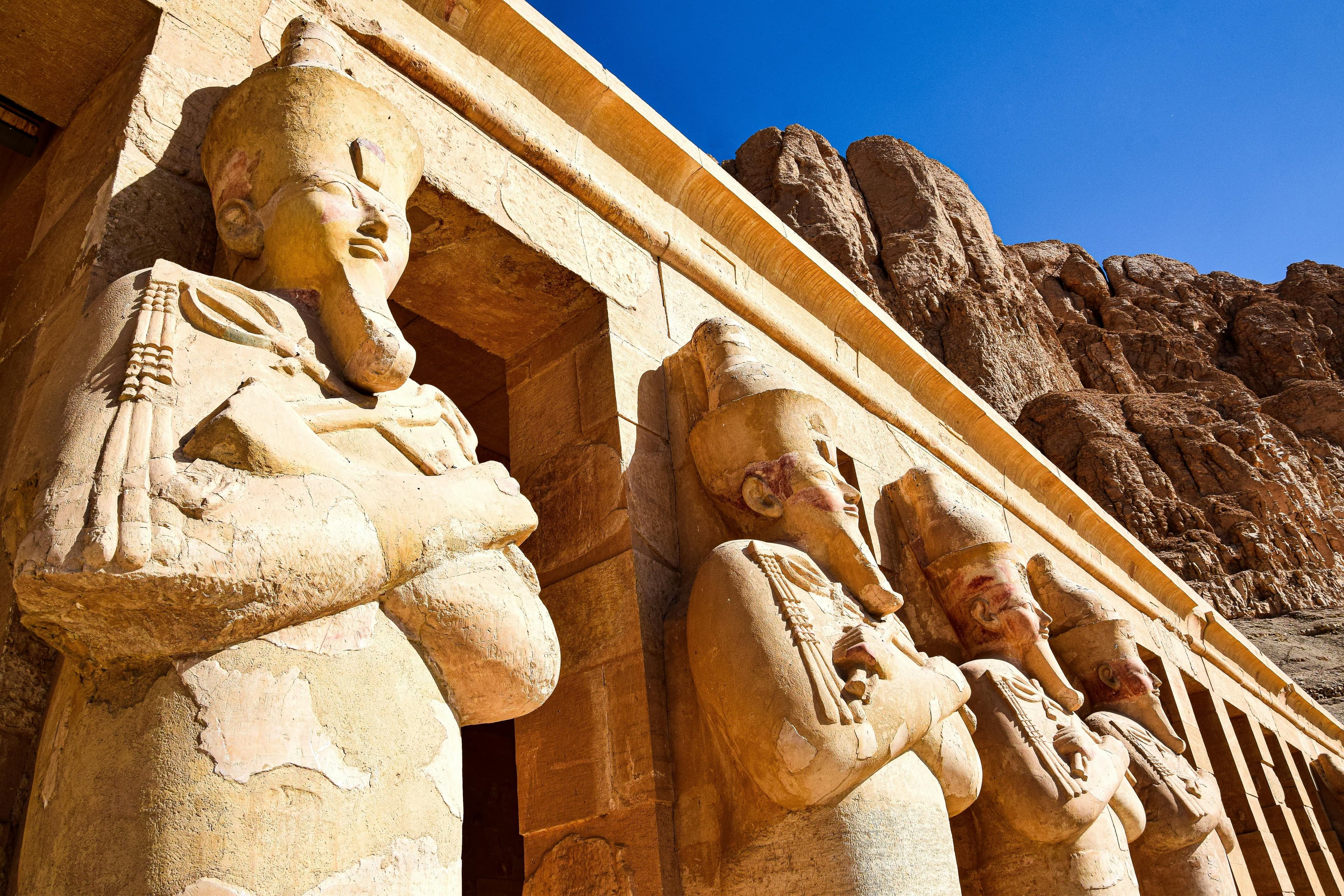
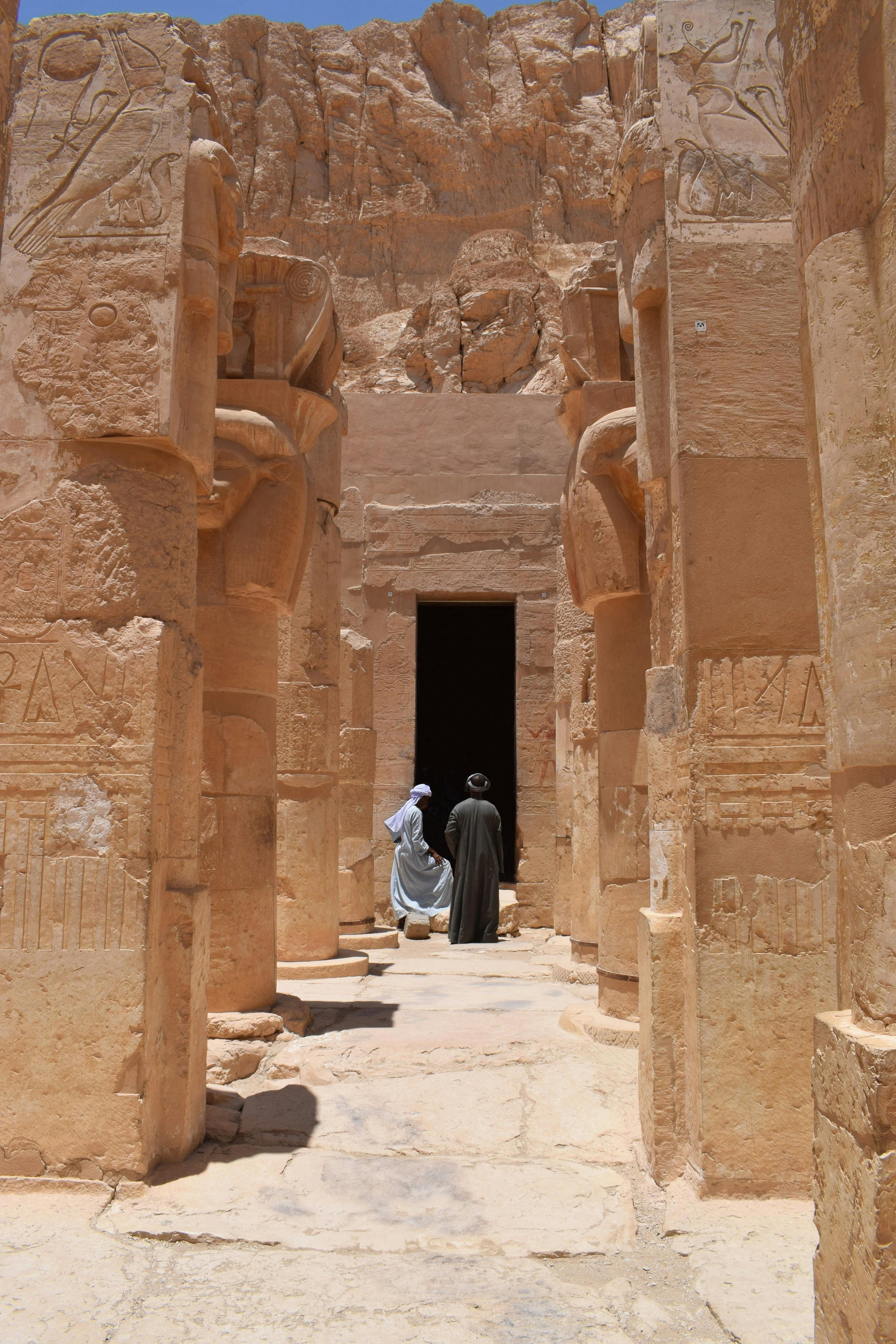
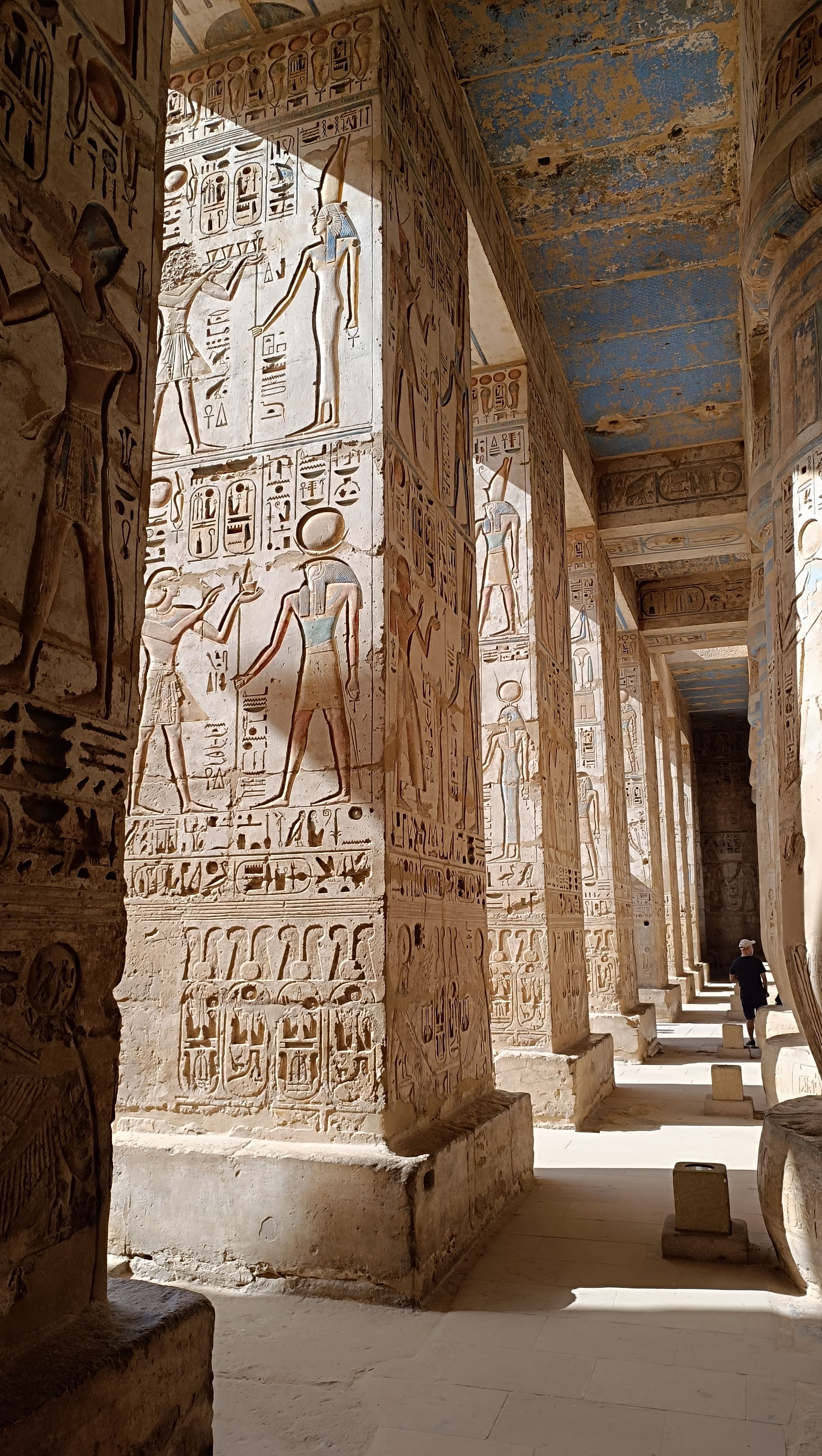
Hatshepsut was never supposed to rule. She was a queen, regent for a boy king — and then, quietly and completely, she took the throne for herself and ruled Egypt as a full pharaoh for two decades. She had herself carved with the royal false beard. She sent a famous trading fleet to the mysterious Land of Punt and had the whole expedition — the ships, the myrrh trees, the exotic goods — recorded on these very walls, where you can still read it.
Egypt was not built to be ruled by a woman, and it did not forgive her for it. After her death, her successor set out to erase her: her name chiselled from the cartouches, her face hacked from the reliefs, her monuments claimed by others. Your Egyptologist walks you to the scars and shows you the deliberate blanks where a pharaoh used to be.
The effort it took to erase her is the surest proof of how completely she had won.
First light, and the last laugh
The temple faces east, straight into the sunrise, which is exactly why the first hour after opening is the one to have. The cliffs behind it catch the light and glow, the pale terraces turn to honey, and — for a while, before the coaches roll in from the coast — you can stand on the ramp she climbed and photograph the whole thing with no one in the frame.
There is a quiet satisfaction to it. A ruler tried to make sure no one would ever stand here and speak her name. Thirty-five centuries later, you do — and that, in the end, is the only revenge that ever mattered.