Luxor
Luxor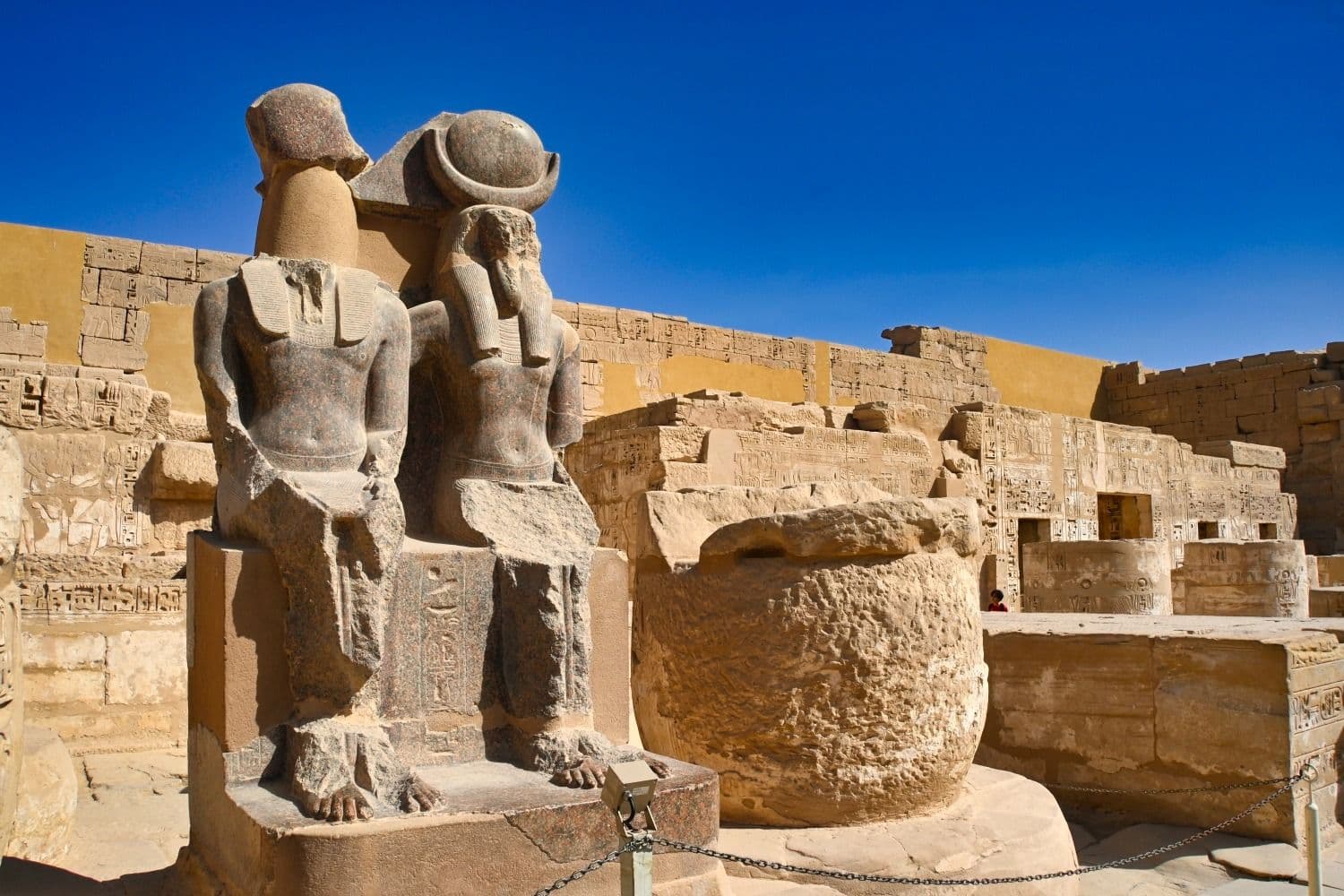
The last guardians of a vanished giant.
Almost everyone who visits the West Bank drives straight past them on the way to the Valley of the Kings — two colossal figures sitting alone in a field, weathered nearly featureless by three and a half thousand years of sun, flood and time. Most people photograph them from the coach and move on. Slow down, stand at their feet with someone who can tell you what they are, and the Colossi of Memnon turn out to be one of the more haunting things in all of Thebes.
They are the pharaoh Amenhotep III, twice, seated and staring east across the Nile — and they are the only survivors of what was once the largest and grandest memorial temple in the whole of Egypt.
The temple that isn't there
This is the part that reframes everything. Behind these two giants once stretched a temple bigger than Karnak — acres of courts, halls and statues, built to be Amenhotep's monument for eternity. The Nile's annual floods and later builders quarrying the stone took almost all of it. What's left are the two colossi that flanked its gate, still keeping watch over an empty plain. Your Egyptologist rebuilds it for you, so you grasp the scale of what has simply gone.
The giants that sang
Then there's the legend that made them famous across the ancient world. After an earthquake around 27 BC cracked the northern statue, it began to emit a strange musical note at dawn — the stone, most likely, warming and expanding in the first sun. Word spread, and Greek and Roman tourists, even emperors, travelled here specifically to hear the "singing" colossus of Memnon, scratching their names and poems into its base. Those inscriptions are still there. A Roman repair, meant to honour the statue, silenced it forever.
They were built to guard a temple that no longer exists, and became famous for a song they can no longer sing. Few ruins say more about time than these two.
A short stop that rewards slowing down
The Colossi are a brief visit by nature — half an hour or so — which is exactly why they work best as the atmospheric opening to a West Bank morning, before the Valley of the Kings or Hatshepsut. Come with someone who can hand you the story, at the right light, and two statues you'd otherwise have driven past become a moment you remember. Tell us your day and we'll place them perfectly within it.